
Got a fire prevention notice from council? What it means, the deadline and the fine
By Clyde Macababbad, founder of Mowie · · 10 min read · read 10 times
Checked against 14 sources on
A fire prevention notice from council means the grass, weeds and scrub on your land must be under 10 cm by the date on the letter (15 cm in Merri-bek), and the law says that date is at least seven days away. Miss it and council sends its own contractor, bills you for the lot, and can add a $2,091 on-the-spot fine. The notice comes from section 41 of the Country Fire Authority Act 1958, and councils in Melbourne's north send them as the Fire Danger Period is declared, which is usually November. You have seven days to object in writing if the notice is wrong. If it is right, the way out is a brushcutter, a mower and a full green bin, or a mower hired for a one-off first cut.
| Council | What the notice asks for | Fire prevention team |
|---|---|---|
| City of Whittlesea | Grass, weeds, scrub and undergrowth under 10 cm from November to March, or earlier if the Fire Danger Period is declared. Urban land stays under 20 cm all year, nature strip included. Rural blocks keep a 35 m fire break from every boundary | 03 9217 2170 |
| Hume | Grass and weeds under 10 cm, fence lines included, plus dead leaves and old branches gone, and no tyres, rubbish or other flammable material | 9205 2200 |
| Nillumbik | Vegetation cut to 10 cm or less where appropriate. On bush blocks the 10/30 and 10/50 rules let you clear vegetation within 10 m of a building, and vegetation other than trees within 30 m or 50 m | 03 9433 3111 |
| Merri-bek | Grass no higher than 15 cm and the fire hazards removed, under the Fire Rescue Victoria Act | 9240 1111 |
The letter arrives in a council envelope, quotes a section of an Act from 1958, and gives you a date. If you search the phrase on it, Google's suggestions are mostly fire safety notices for New York apartment blocks, which is no help to someone in Mernda with a paddock of seed heads out the back. Here is what the notice is. Under section 41 of the Country Fire Authority Act, a council's fire prevention officer can serve a notice on the owner or occupier of land for anything on that land, other than a building, that "constitutes or may constitute a danger to life or property from the threat of fire". Long dry grass is the usual thing. Inside the old metropolitan fire district the same job is done under the Fire Rescue Victoria Act, which is why Merri-bek's flyer names that one instead.
The timing is the Fire Danger Period. CFA declares it council by council depending on rain, how far the grass has cured and local conditions, and says it can start as early as October and run as late as May. On 21 September 2026 the CFA's fire restriction dates page showed "No restrictions in force yet" for Whittlesea, Hume, Nillumbik and every other council in the north. Whittlesea does not wait for the declaration: its fire prevention program wants grass under 10 cm from November to March regardless, and earlier if the period is declared early. I live in Mill Park, which is Whittlesea's patch, so 1 November is on my calendar too.
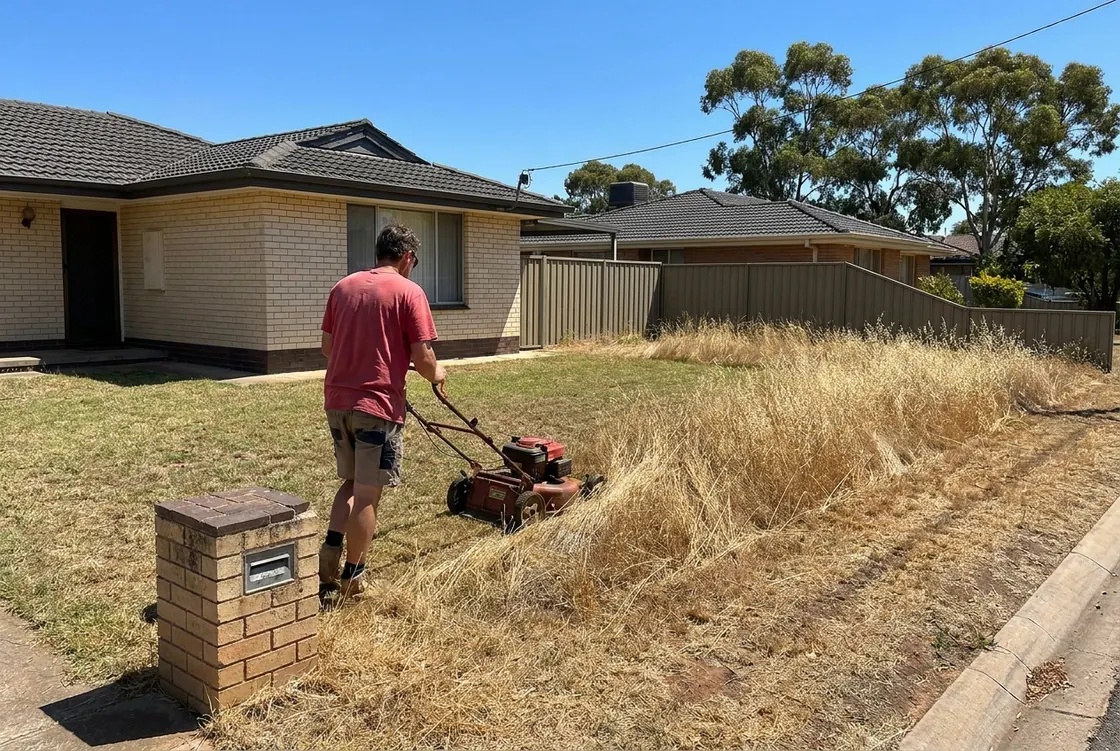
What does a fire prevention notice actually ask you to do?
Cut everything that burns to under 10 cm, clear the rubbish that burns with it, and keep it that way until the season ends, not just once. Whittlesea's wording is "keep grass, weeds, scrub and undergrowth under 10cm between November to March". Hume's fire management page says under 10 cm "including around fence lines", and adds dead leaves, old tree branches, flammable materials, old tyres and rubbish to the list, because a fence line of uncut grass is the path a fire takes from the paddock to the house. Nillumbik's property guidance says 10 cm or less "where appropriate", and on bush blocks its 10/30 and 10/50 rules let you clear vegetation within 10 m of an existing building and vegetation other than trees within 30 m or 50 m. Merri-bek, closer in, settles for 15 cm.
The date on the letter is the council's, but the Act sets the floor: a notice "must specify the time (not less than 7 days) within which the owner or occupier must comply". Seven days is the minimum, and councils commonly give more, so read your letter rather than this page for the number. The part people miss is the second inspection. Whittlesea says all properties "will be inspected at least twice during the declared fire danger period", so a cut in the first week of November that is knee-high again by Christmas is not compliance, it is a second letter. Whittlesea also has a year-round rule that has nothing to do with the fire season: on urban and commercial land, vegetation including nature strips must stay under 20 cm, and residents are "legally required" to maintain the nature strip next to their home. The notice can cover the strip. Mow it.
What happens if you ignore a fire prevention notice?
Council's contractor cuts it and you pay the whole bill, then a $2,091 infringement, and if council prefers the court, a fine of up to $25,092 or 12 months in prison. Whittlesea, Hume and Merri-bek all say the same thing in their own words: if the work is not done by the due date, a contractor is appointed to do it and "the owner or occupier will have to pay all associated costs". The Act adds that council may recover "the costs of serving the notice (including reasonable administrative, labour and overhead costs)" unless the notice is withdrawn. Then come the penalties.
| Step | What happens | What it costs in 2026-27 |
|---|---|---|
| The due date passes | Council appoints a contractor to carry out the works in the notice | The contractor's full bill, plus the cost of serving the notice |
| Infringement | An authorised officer serves a fire prevention infringement notice: 10 penalty units under section 41E | $2,091 |
| Court | Prosecution under section 41D: 120 penalty units or imprisonment for 12 months, or both | Up to $25,092 |
| Fine unpaid | Nillumbik forwards an unpaid infringement to the Magistrates' Court | The fine plus court costs |
Those dollar figures are not mine. Nillumbik's infringement page states them as "$2,091 infringement penalty or a maximum of $25,092 if found guilty", and they are 10 and 120 penalty units at the 2026-27 penalty unit value of $209.10, up from $203.51 last year. Hume quotes the same 120 units and 12 months and cites section 41D(1). Paying the fine does not cancel the work: the contractor still comes and the bill still arrives. Set against that, a first cut from a mower who does them for a living is a small number, and the long grass guide explains what goes into it.
Can you object to a fire prevention notice, and should you?
Yes, in writing to the council's fire prevention officer within seven days of the notice being served. Object if the notice is wrong. If the grass is long, cut it. Section 41B gives you seven days from service to "lodge a written objection with the fire prevention officer ... stating the grounds of objection". If the officer thinks the grounds are reasonable they must consult you and "make a genuine attempt to resolve the matter", and within 14 days they must confirm, vary or withdraw the notice, with a new compliance date if it stands. If they do nothing in 14 days, or you are not satisfied, section 41C gives you seven more days to appeal in writing to the CFA Chief Officer, who must weigh "the proper needs of conservation and alternative means of addressing the threat of fire" before confirming, varying or cancelling. Hume runs the objection through its online Fire Prevention Notice response form; elsewhere it is a letter or an email to the address on the notice.
Grounds that hold up are the boring ones. You are not the owner or occupier any more. The boundary on the notice is wrong. The work was finished before the letter was posted, which Merri-bek concedes happens because of the lag between inspection and mail. The vegetation is native grassland under a planning overlay, which is exactly what the conservation clause is for. You need more than the days given because the block is big and the contractor is booked, which is a request to vary the time under section 41B(3)(b), not a refusal. Grounds that do not hold up: it is the tenant's job (the Act lets council pick the owner or the occupier), you were away, or the neighbour's block is worse. The Act makes the duty to comply "subject to" the objection and appeal sections, and a confirmed notice comes with a fresh date, but do not build a plan on that. My view is cut first and argue second. A short lawn ends the matter in an afternoon; a paper trail runs for weeks and the grass keeps growing while it does.
Who has to cut it: the owner, the renter or the council?
The notice can name the owner or the occupier, the renter usually does the mowing under Victorian tenancy law, and the council cuts only its own land. Section 41 says "owner or occupier", and section 41A lets council serve it by post to the person's "usual or last known residential or business address", which for a landlord is the rates address. That is how a landlord finds out about the grass at a rental weeks after the officer walked past it. Rental Dispute Resolution Victoria puts "mowing the lawn regularly" and light weeding on the renter's side as part of keeping the property reasonably clean under the Residential Tenancies Act 1997, with the bigger jobs, the ones needing a ladder or a cherry picker, on the landlord's. So the renter mows, but the fine attaches to whoever the notice names. A landlord who gets the letter should send it on the same day, and check.
Vacant land is where most notices go. Whittlesea's rule for vacant residential land is that "grass, weeds and scrub do not grow to more than 20cm high", and Hume sends advisory letters to vacant land owners every year before the notices start. A large block is a different job again: Whittlesea wants a 35 m fire break from every boundary kept under 10 cm during the fire prevention period, trees excepted, and the acreage guide covers what slashing a paddock costs. Council's own share is the reserves, the road verges and the fire breaks on council land, which Whittlesea says it cuts "at least twice during the fire danger period". Your nature strip is not on that list.
How do you get knee-high grass under 10 cm before the due date?
In stages on the same day: brushcutter or whipper snipper first, then the mower on its highest setting, then a lower pass, then the clippings in the green bin. The rule of thirds in the long grass guide is about keeping a lawn alive. A notice is about fuel, so the fuel comes off now and the lawn's looks come second; council does not care if it is brown. Walk the yard first, because long grass hides sprinkler heads, star pickets, dog toys and, in a Melbourne November, the odd snake. A domestic mower will not go through knee-high seed heads in one pass, so take it to ankle height with a whipper snipper or a hired brushcutter, rake, then mow. Whittlesea's green-lid bin takes grass clippings, placed near the top so it empties, but one bin does not take a paddock, and the clippings guide has the other options.
Pick the day. CFA's grassfire page says these fires reach "up to 25 kilometres per hour, faster than you can run", and "the taller and drier the grass the more intensely a grassfire will burn", which is the whole argument for the notice. It is also the argument against mowing dry grass at two in the afternoon on a Total Fire Ban day. CFA's "Can I or can't I" page says mowing, slashing and trimming should be avoided wherever possible on those days, and where it cannot wait the machine must be free of faults, fitted with a spark arrester, run with three metres cleared around it and with nine litres of water or another way to put a fire out within reach. Cut in the morning on an ordinary day and none of that applies.
If the date is close and the weekend is gone, hire it out. On Mowie you list the lawn with the grass marked as overgrown or worse and a photo, so the mowers who bid know it is a first cut and price it as one; the price guide lifts its figure for long grass rather than pretending it is a normal mow. Mowers who work the north are on the northern suburbs page.
Where a fire prevention notice goes wrong
The first mistake is the single cut. Kikuyu and couch put on their fastest growth in November, and a lawn taken to 8 cm in the first week is over 10 cm by the second inspection. Book the follow-up before the first cut is done. The second is the address: the Act lets council post the notice to your last known address, and if it cannot find you at all it can display the notice on the land and put it in the paper, so a rates address that is three houses old means the first you hear of it is the contractor's invoice.
Third, paying the fine and stopping there. The infringement is for not complying; the work is still owed, and the contractor still comes. Fourth, mixing up Whittlesea's two numbers: 20 cm is the year-round local law for urban land, 10 cm is the fire season, and the notice means the smaller one. Fifth, burning it off instead. CFA's rule during the Fire Danger Period is no fire in the open air unless you have a permit or meet its conditions, and Hume needs a permit for open-air burning on land under two hectares even outside the period. Sixth, the standoff between a landlord and a renter over whose job it is while the due date passes; the fine lands on the name at the top of the letter, not on the winner of the argument. Last, the nature strip. In Whittlesea it is legally yours to keep down, and an officer looking at the front of the property sees it before anything else.
None of this is hard. It is a letter with a date, the date is real, and the fix is a mower.
Quick answers
How long do you get to comply with a fire prevention notice?
The date is printed on the letter, and the Country Fire Authority Act says it cannot be less than seven days after the notice is served. If you lodge a written objection with a reason, the council's fire prevention officer can vary the time. The season is the real deadline: Whittlesea inspects every property at least twice during the Fire Danger Period, so grass that creeps back over 10 cm in January earns a second letter.
How much is the fine for a fire prevention notice in Victoria?
The on-the-spot infringement is 10 penalty units, which is $2,091 at the 2026-27 penalty unit of $209.10. If council takes it to court instead, the maximum under section 41D is 120 penalty units, $25,092, or 12 months in prison, or both. Either way you also pay the contractor council sent to do the work, and the Act lets council recover the cost of serving the notice.
Does a fire prevention notice apply to renters?
It can. The Act lets council serve the notice on the owner or the occupier, and mowing the lawn regularly is the renter's job under Victoria's tenancy law. Whoever is named on the notice is the one who gets fined, so a landlord who receives it should send it to the renter the same day and check the work was done.
Can I mow the lawn on a Total Fire Ban day?
CFA says to avoid it wherever possible. If it has to happen, the mower, trimmer or slasher must be free of faults, fitted with a spark arrester, used with three metres cleared around it and with nine litres of water or another fire suppression method at hand, and those conditions apply to any vegetation that is not green. Cut in the cool of the morning on an ordinary day instead.
What if I cut the grass before the notice arrived?
Merri-bek's flyer says there is a small delay between the inspection and the letter, and that if you have already done the work you need not act. Phone the council's fire prevention team anyway so the file says so, keep a dated photo, and keep the grass under the height until the season ends, because the follow-up inspection is not a rumour.
Find your suburb, what a cut costs there and which mowers cover it.
Where this comes from
Each source below backs a specific claim on this page. Last read on . We take no payment from anyone linked here.
- 1. City of Whittlesea: fire prevention program - grass under 10 cm from November to March or earlier if the Fire Danger Period is declared; every property inspected at least twice; a contractor after the due date at the owner's cost; 35 m fire breaks on rural land
- 2. City of Whittlesea: mowing and slashing land - residents are legally required to maintain the nature strip; urban vegetation under 20 cm all year; vacant residential land under 20 cm; council slashes its own land and fire breaks at least twice a season
- 3. City of Whittlesea: food and garden waste bin - grass clippings go in the green-lid bin, placed near the top
- 4. Hume City Council: fire management - grass and weeds under 10 cm including fence lines, leaves, branches, tyres and rubbish removed; contractor after the due date; on-the-spot penalty; up to 120 penalty units or 12 months under s41D(1); objection through the FPN response form; burn permits under 2 ha
- 5. Nillumbik Shire: preparing your property for fire - cut vegetation to 10 cm or less where appropriate; the 10/30 and 10/50 clearing rules; the 2025-26 Fire Danger Period ended 7 April 2026
- 6. Nillumbik Shire: pay a Fire Prevention Notice infringement - $2,091 infringement, up to $25,092 if found guilty; review available; unpaid fines go to the Magistrates' Court
- 7. Merri-bek City Council: fire prevention notices flyer - grass no higher than 15 cm under the Fire Rescue Victoria Act; contractor plus infringements after the due date; no action needed if the work was done before the letter arrived
- 8. Country Fire Authority Act 1958 (Vic), sections 41 to 41E - authorised version 160: notices on the owner or occupier, at least 7 days to comply, service by post, cost of service recoverable, 7-day objection and 14-day decision, appeal to the Chief Officer, 120 penalty units or 12 months, 10 penalty unit infringement
- 9. Department of Treasury and Finance Victoria: indexation of fees and penalties - a penalty unit is $209.10 in 2026-27, $203.51 in 2025-26
- 10. CFA: about the Fire Danger Period - declared per municipality on rain, curing and local conditions; as early as October, as late as May; no fire in the open air without a permit or meeting the conditions
- 11. CFA: fire restriction dates - no restrictions in force yet for any council in Melbourne's north on 21 September 2026
- 12. CFA: can I or can't I? - mowing, slashing and trimming should be avoided on Total Fire Ban days; otherwise a fault-free machine with a spark arrester, 3 m cleared and 9 L of water or other suppression at hand
- 13. CFA: grassfires near cities and towns - grassfires reach up to 25 km/h; the taller and drier the grass the more intensely it burns
- 14. Rental Dispute Resolution Victoria: who maintains gutters, gardens and pools in a rental? - mowing the lawn regularly is the renter's job under the Residential Tenancies Act 1997; jobs needing a ladder or cherry picker are the landlord's
Clyde started Mowie in Mill Park in 2026 and runs it day to day. The prices and timings in these guides come from the jobs booked through the site and from the mowers who do them, and everything else is checked against the source listed beside it. He lives on a kikuyu lawn in Melbourne's north that has taught him most of this the hard way.
More about Mowie and Clyde · Tell us if something here is wrong